
Double entry between systems
An order passed from the website to the management software, an invoice sent to accounting, a contact recorded in the CRM: your systems exchange data directly, with no re-keying.

Sébastien Mizrahi helps companies optimise and automate their processes: he simplifies what can be simplified, connects your software, removes double entry and programs what repeats itself. The initial audit is free.
Based in Chaponost, west of Lyon, he works in Lyon, anywhere in France and remotely.
How many hours do your teams spend each week re-keying data from one system to another, chasing follow-ups or consolidating spreadsheets? That time has a direct cost, and it weighs on team motivation.
Throughout my career, in every company I have worked for and with every client, I have observed the same thing: time-consuming, low-value tasks that could be optimised or automated. In industry (ArcelorMittal, NXP Semiconductors, Markem-Imaje), healthcare (Keranova, Sanofi Pasteur, Biomet), telecoms (SoftAtHome), insurance (Groupama) and public administration (French Ministry of Defence), the sectors differ, the observation remains.
Entrusting these tasks to reliable software has been the core of my work since 2007. Artificial intelligence is a means, not an end: it is useful for reading a document or classifying a request, but most of the gains come from a well-designed process and robust software.
Saving time does not require replacing your tools. Your management software, CRM, invoicing tool, email or spreadsheets already fulfil their role. I interconnect them through their APIs, exports or databases, and automate the exchanges between them. Your teams keep their tools; only the double entry disappears.
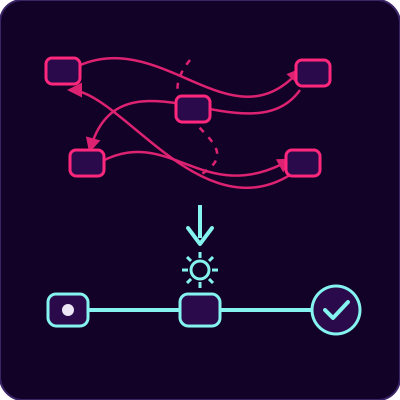
Automating an inefficient process only reproduces its flaws faster. Before any development, we review together which steps can be removed, simplified or reordered. Part of the gains is often achieved at this stage, before the first automation.
Repetitive tasks, clearly defined rules, data passed from one system to another: this is where automation delivers the best return on investment.
An order passed from the website to the management software, an invoice sent to accounting, a contact recorded in the CRM: your systems exchange data directly, with no re-keying.
PDFs, emails, bank statements, purchase orders: documents are read, classified and filed automatically, with checks before anything is written.
Indicators are consolidated automatically and distributed every week or every month, with no manual consolidation.
Overdue invoice, upcoming deadline, abnormal value: the right people are informed at the right time, by email or on mobile.
Reconciling information from several sources (ERP, CRM, bank, files, business tools) to obtain a consolidated and reliable view, with no manual handling.
Anticipating activity from your historical data: volumes, sales, workload or cash flow, using time series prediction models.
Time series prediction →Checking data consistency before an error becomes costly: balances, duplicates, missing information. Every control is logged.
A program, a form or a dedicated dashboard: I develop what is missing between your systems, in a lean and maintainable way.
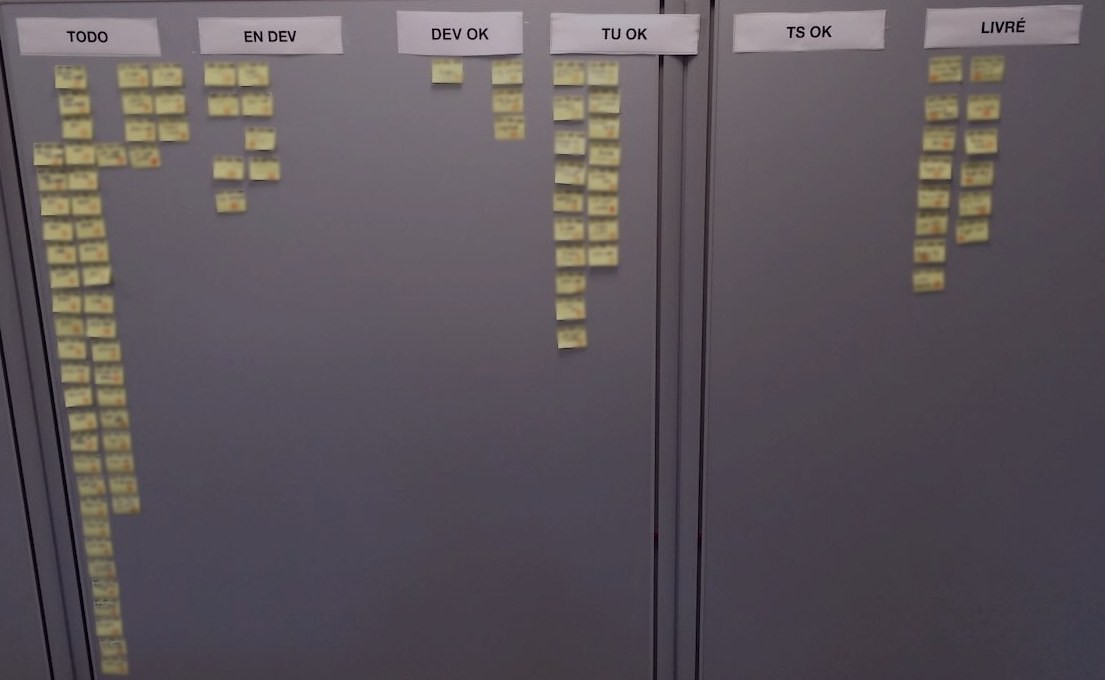
The first two steps make up the audit, and the audit is free. It gives you a clear assessment before any commitment.
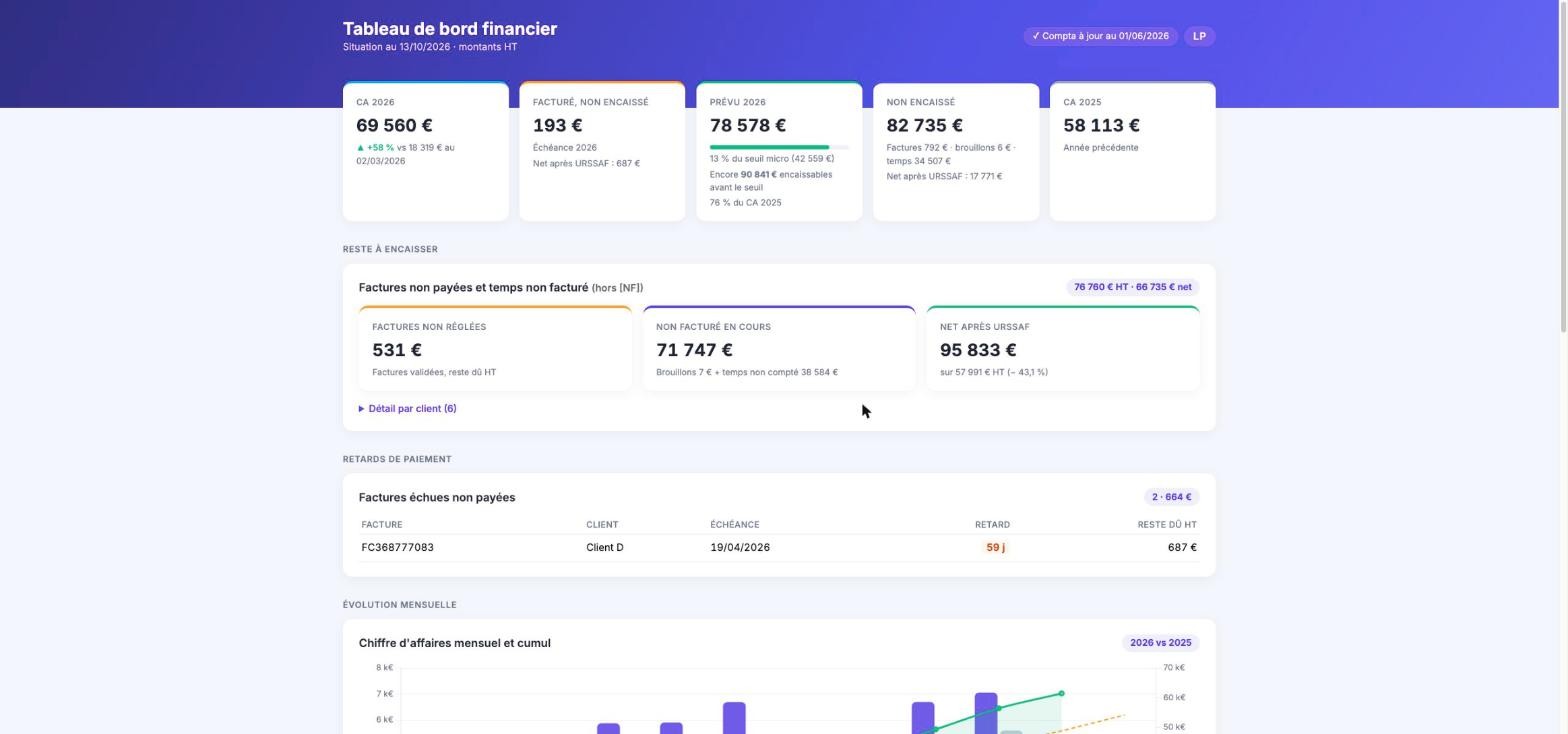
Optimisation also applies to development teams: a visible workflow, testing at every stage and regular deliveries.
Working with your teams, I identify the tasks that consume time and energy, and we measure how much time they represent today.
Your software, your IT infrastructure, the security of your data and the exchanges already in place.
A simplified process, interconnected tools, a dedicated program, and AI only where it adds real value. The cost is known before work begins.
Development, testing, go-live and support for your teams.
Results are compared with the initial measurement, and the solution is adjusted until the agreed objective is met.
Maintenance, monitoring of your activity and new optimisation opportunities as they arise.
A selection of projects in production. All projects.
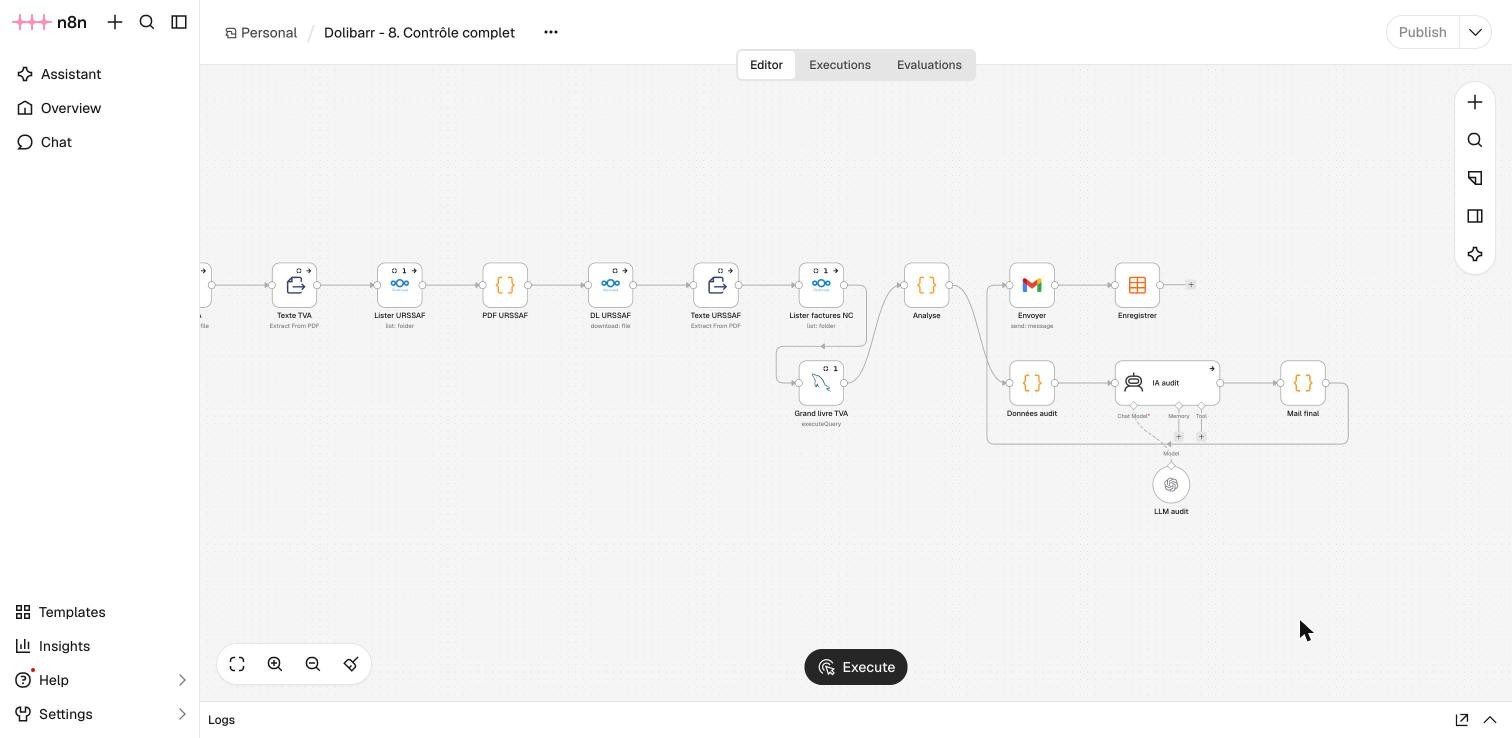
The monthly close in Dolibarr relies on nine workflows. The code posts the entries, AI reads the statements and explains discrepancies, a full control verifies everything, with three human approvals per month.
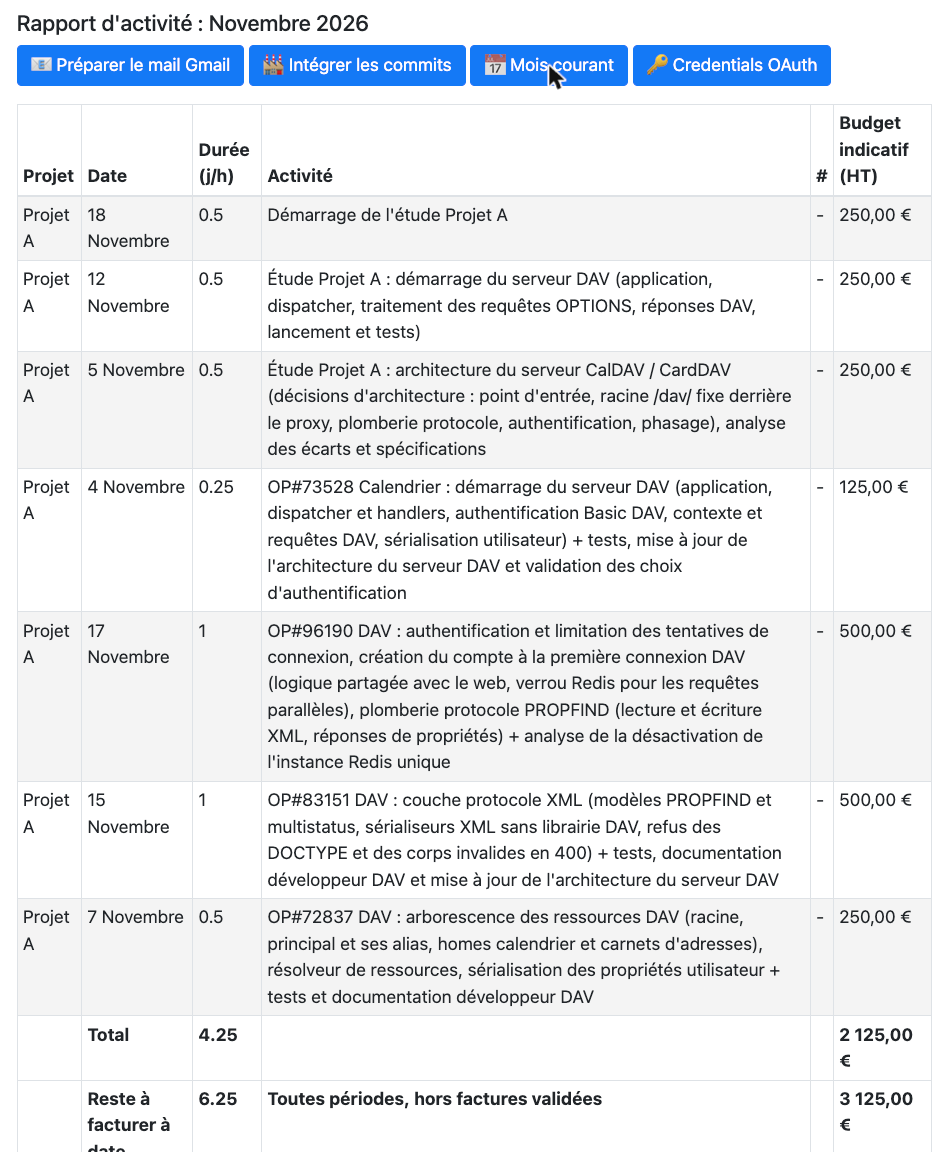
Dolibarr · MariaDB · AI · n8n Read the write-up →Time logged in Dolibarr produces a monthly report for each client: activities, durations and budget. Git commits can be included and the email to the client is prepared automatically. Daily time entries are drafted from commits, calendar and emails.
Dolibarr · Git · Gmail · AIA continuous integration dashboard for the development teams, and automated functional tests on Android.
Continuous integration · Android · automated testsPage analysis, an AI workflow and a report: a fully automated audit service, developed in one month.
Python · Flask · LLM Read the article →A SaaS extranet that handles gift card management: CSV import, PDF and quote generation, AI reporting.
PHP · API · AI Read the case study →Smartwatch data and meal photos are collected automatically, analysed, then summarised in a report sent twice a day.
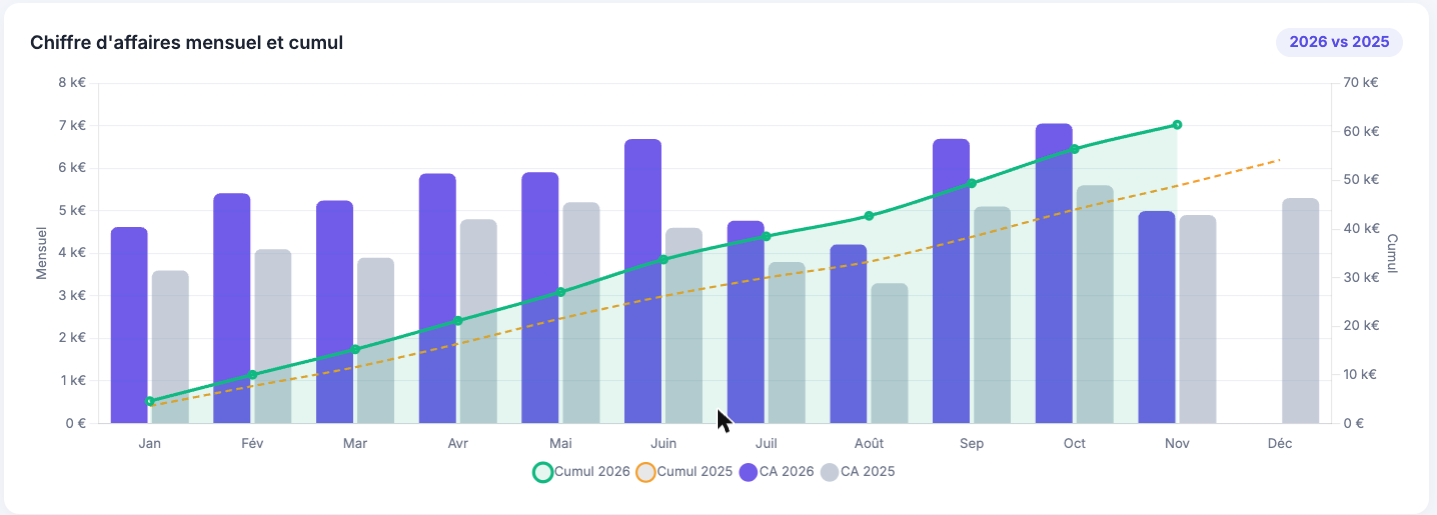
SQL · AI · Telegram Read the article →All the data shown in these screenshots (amounts, dates, clients) is fictitious.
I do not sell a tool: I select the one that fits your context. Most often, custom Python programs, the APIs and databases of your systems, scripts and scheduled tasks, or a workflow orchestrator such as n8n where relevant. When AI adds real value, MCP servers or agents integrate it into your tools, with models hosted on your infrastructure if your data is sensitive.
One principle remains: every write to your data is verifiable. The code checks, and a human approves at key stages.
An automation is software. It must be reliable, secure, maintainable and durable. This is where my experience in software architecture makes the difference: lean solutions, reviewed code and documentation your teams can use.
Based in Chaponost, I work on site in Lyon, the western Lyon area and anywhere in France, or remotely when more appropriate. To understand a business, nothing replaces a meeting at your premises.
Optimising means reviewing a process to remove pointless steps and make it simpler. Automating means handing the repetitive tasks that remain over to a program: double entry between tools, incoming documents, reports, reminders, checks. The rules are written once, then the machine applies them every time, with no copying mistakes.
Yes. The first two steps, understanding your business and reviewing what exists, make up the audit, and it is free. You then decide, knowing the cost, whether to go further. Ask for the audit.
No. I build automations around the tools you already have: I connect them through their APIs, their exports or their database, and I automate what happens between them. Your teams keep their habits.
The ones that repeat often, follow clear rules and move data from one tool to another. From the very first step, we write down how long they take today, so we can measure what the automation saves later on.
No. AI is useful to read, sort, summarise or explain: a PDF, an email, a request. Anything that writes to your data goes through verifiable code and, at the important steps, human approval. That is the principle applied in automating an accounting close.
When the data is sensitive, AI models can run on your own servers (Ollama, LiteLLM), and the automations on your infrastructure, in Docker. We decide together what can leave and what stays with you.
Whatever fits your context: the APIs and databases of your software, MCP servers and clients to plug AI into your tools, AI agents, Python programs, or a workflow orchestrator when it makes sense. On the AI side, OpenAI, Claude or local models, depending on the need and how confidential the data is.
The initial audit is free. After that, my indicative rate is €69 per hour: once the audit is done, I draw up a fixed-price quote, so the cost is known before we start.
I am based in Chaponost, in the western Lyon area. I work on site in Lyon, the neighbouring towns and anywhere in France, or remotely when that is easier.
From Chaponost, near Lyon, on site or remotely. A quick reply with a first analysis of your needs.